
npx @buildinternet/releases get sentryRecently shipped Rust native crash reporting, regex log search, an Origin integration, and a Seer Agent that now reaches external telemetry.
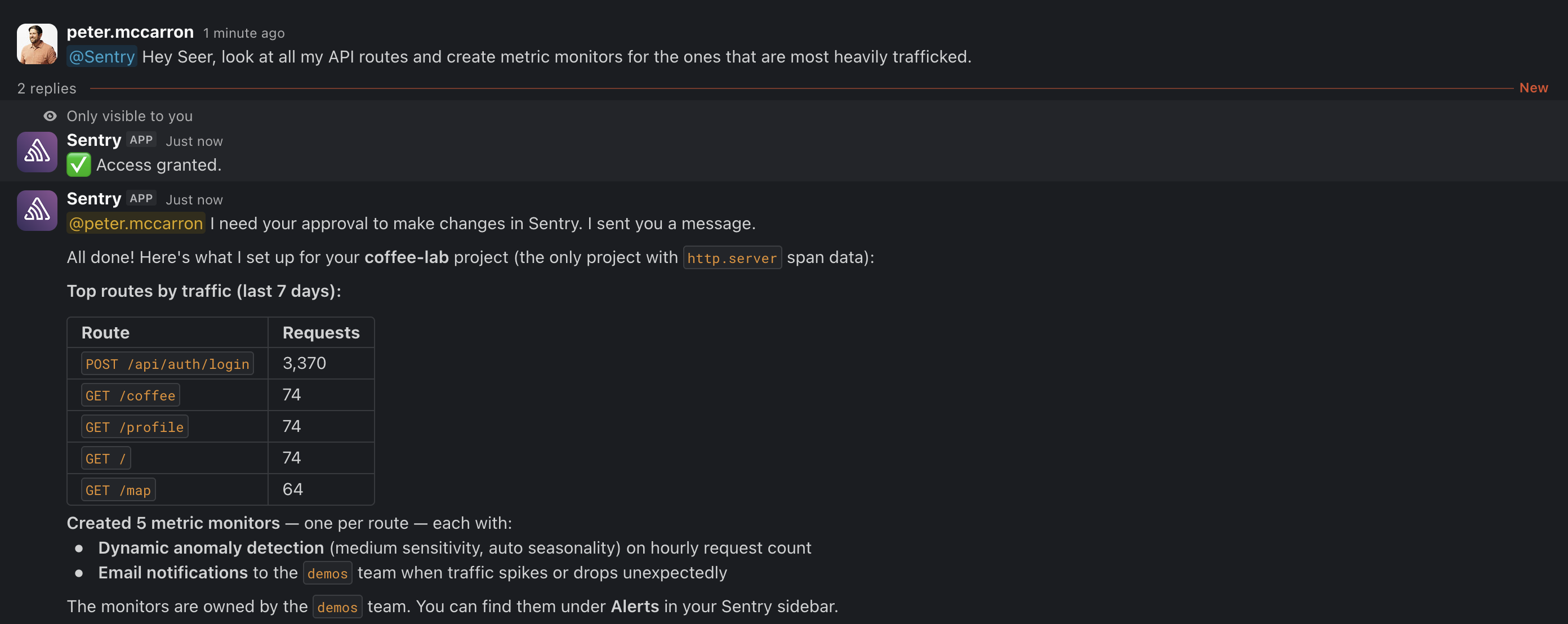
Seer Agent writes more of Sentry and pulls in outside data. Through the Sentry API it sets up dashboards and widgets, creates monitors and alerts, triages issues, and saves explore queries. It also connects third-party telemetry sources, and iterates on its own PRs: follow-up commits land on the existing PR, and failing CI checks get investigated and fixed with capped attempts.
MCP agents can manage alerting. On the hosted Sentry MCP server, agents create, update, and delete alert rules and metric monitors, link external tickets to issues, and see suspect commits. Writes need the Manage Projects & Teams skill; re-authorize to grant the new scopes.
Origin joins the supported code hosts. Stack trace linking jumps from a frame to the exact line, CODEOWNERS imports route issues to the right people, release commit tracking shows what shipped, and commit messages can resolve issues.
Crash coverage widened. Rust SDK 0.49.3 captures native crashes — segfaults from unsafe code or C FFI — as minidumps on Linux, macOS, and Windows. An experimental Android integration turns Android 17 Memory Limiter kills into reportable events.
Logs search supports regex. Filter any string attribute with matches regex in Explore → Logs to match patterns instead of exact text.
SDK instrumentation broadened.
- Hono auto-instruments: request spans named after matched routes, per-middleware spans, and captured handler errors.
@sentry/nextjs/cloudflaretraces Next.js apps on Cloudflare Workers the way Node.js does.- Cloudflare Cron Trigger check-ins are opt-in and billed.
- Agent Tracing, GA since 11.0.0, added eve and Mastra; Python 2.72.0 adds boto3 span attributes.
Breaking: repeated Sentry.init() warns while a client is active, and Sentry.close() unbinds the client, so getClient() returns undefined. Pinned TLS CAs must be removed before February 2027.