Scoring: judge how well your AI actually performed
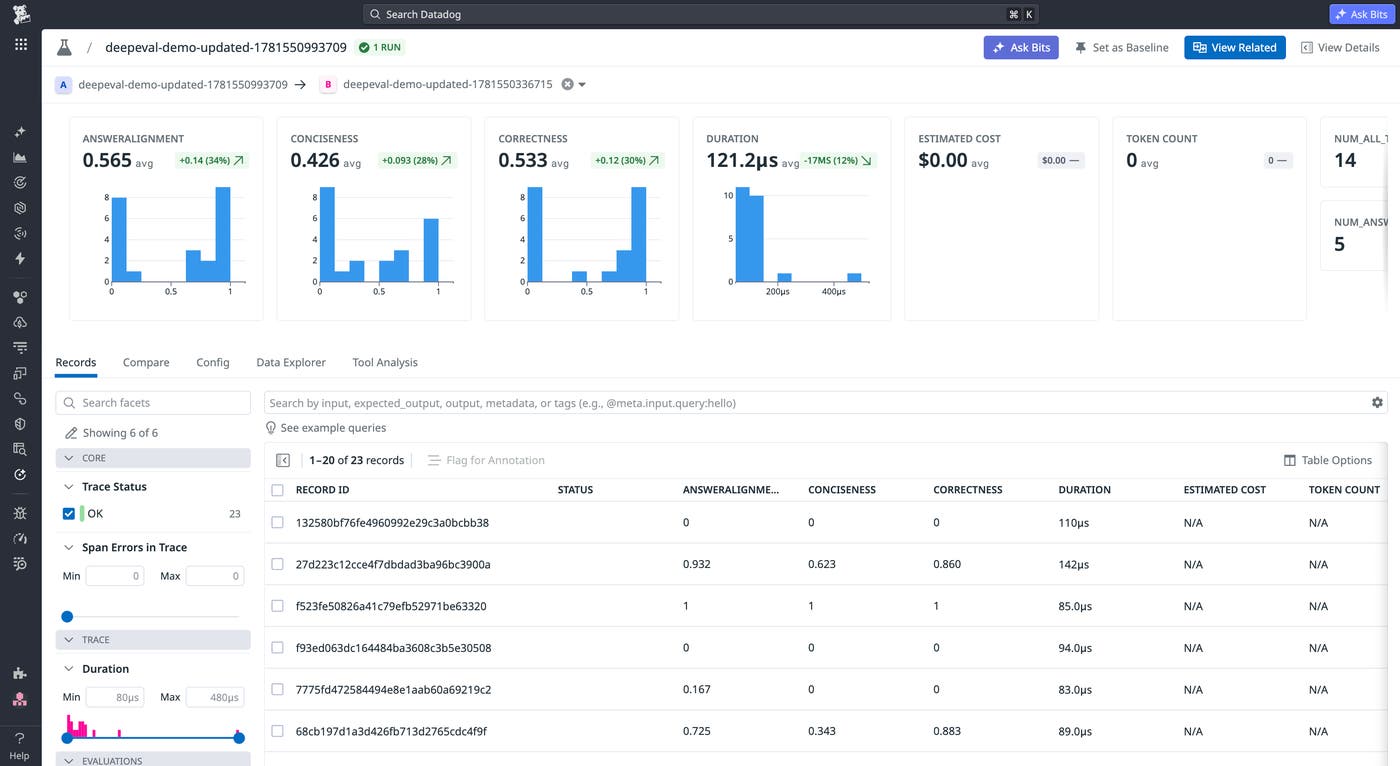
Scoring lets you attach a named quality signal to a function run, a step, or an experiment variant. It shines for AI evals: run an LLM-as-a-judge over a result and write the verdict back as a score with inngest.score({ name, value }), or defer the judge entirely so a slow model call never blocks the run that produced the output.
Key features:
- Score right at the execution layer — Scores land on the run itself alongside execution metadata.
inngest.score()writes immediately, andstep.score("id", { name, value })records the score as a durable, memoized step. - Defer expensive scorers —
createScorer()turns an LLM-as-a-judge or any other eval into a deferred function. Trigger it withdefer()from your run and the score is written off the critical path. - Score variants from anywhere —
inngest.score.experiment()credits a score to the experiment variant that produced a result, even when the signal arrives much later.
Available now in beta in the Inngest TypeScript SDK.
Fetched July 2, 2026