Recently shipped native crash reporting in EAS Observe and a coding-agent step for custom builds.
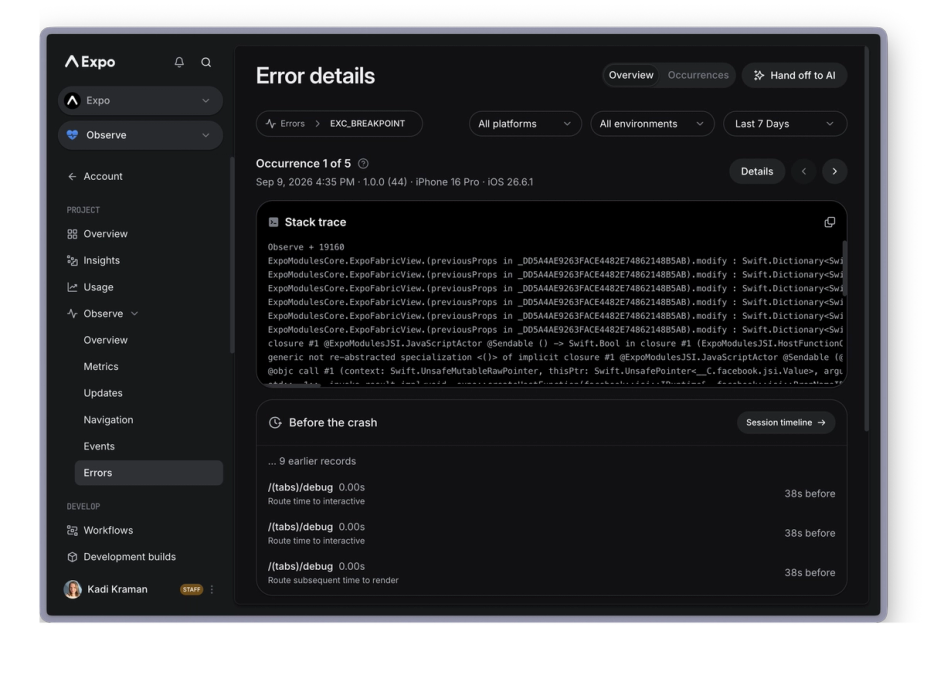
EAS Observe now catches native crashes. On SDK 57, update expo-observe to 57.0.21 or later: Android and iOS crashes now land in the same list as JavaScript errors, filterable by source. Android coverage includes uncaught Java and Kotlin exceptions plus the crash records the OS keeps on Android 11 and later; iOS covers Mach exceptions like EXC_BAD_ACCESS, Unix signals like SIGSEGV, and uncaught Objective-C and Swift exceptions.
Custom builds can run coding agents. The eas/run_agent step runs Claude Code — or Codex — connected to the Expo MCP server, and writes agent messages, tool calls, and errors into the job log. Sandboxes can also run shell commands and read text and image files through that server.
SDK 58 beta targets iOS 27. Ship with the beta now if you need iOS 27 support; the beta runs three to four weeks with fixes landing continuously. React Native 0.88 is still a release candidate, so SDK 58 stable follows RN 0.88 stable.
Simulator sessions gained preview and capture tooling.
- iOS Simulator previews stream over H.264, and serve-sim can record sessions.
--network-capture records HTTP(S) traffic from apps on the device, optionally keeping headers and bodies.--egress local now works on Android, with refused destinations logged as warnings.--build-fingerprint installs the newest build matching a fingerprint.
Smaller EAS CLI additions.
- Node.js 20 is deprecated with a warning; a future release requires Node.js 22 or newer.
eas/upload_embedded_bundle uploads the embedded bundle from custom builds that use eas/build.eas update:view --json reports signed assetMapUrl and sourceMapUrl values.--force-end-active-rollout ends an in-progress rollout on eas update and its rollback and republish variants; --upload-source-maps uploads source maps with eas update.
