Upcoming Changes when using Non-Verifiable Callback URIs
To enhance security and mitigate risks of application impersonation and phishing attacks, we are recommending the transition to HTTPS-based callbacks using Android App Links and Apple Universal Links whenever possible. In addition, we are introducing a change in how the service handles custom URI schemes and loopback URI as callbacks.
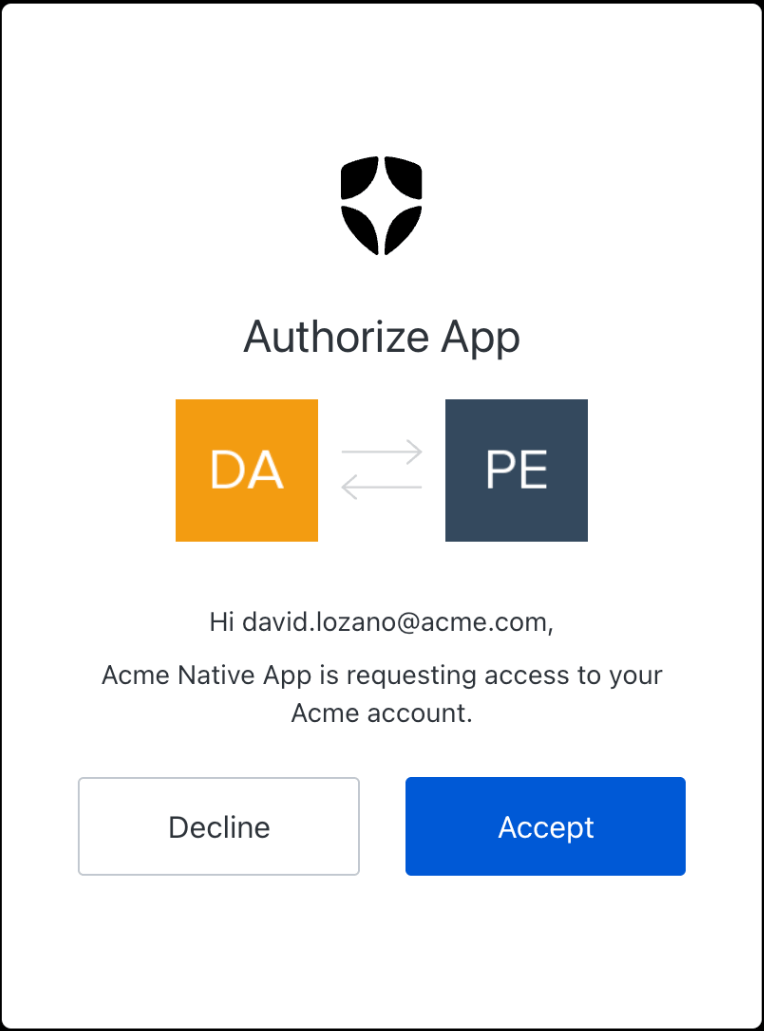
More specifically, for authentication requests specifying a custom URI scheme or a loopback URI as the callback, we are introducing a login confirmation prompt used in scenarios that would previously return a response without requiring user interaction. For example, in a single sign-on (SSO) scenario, if authentication request requirements can be satisfied from an existing authenticated session, the service will display the new login confirmation prompt instead of seamlessly returning a response to the specified custom URI scheme / loopback URI callback.
Additionally, authentication requests including prompt=none will be rejected when Applications use non-verifiable callback URIs and are configured to use the new login confirmation prompt.
Review the User Confirmation Prompt section of Measures Against Application Impersonation to learn more about the new prompt.
Tenants created before October 15, 2025, maintain the previous behavior as the default until April 28, 2026. After the October cutoff date, newly created tenants may default to displaying the new login confirmation prompt with some exceptions due to each environment's deployment schedule. For any tenant maintaining the previous behavior, we recommend you opt in beforehand to use the new behavior. Alternatively, you can opt out of using the additional confirmation prompt if strictly required. Additional information on this situation is available at Migrate to Custom URI Scheme Redirect End-User Confirmation.
Fetched April 11, 2026